
A properly aligned jaw plays an important role in comfortable chewing, clear speech and a balanced bite. However, some people experience jaw alignment problems that cause their upper and lower teeth to meet incorrectly. These concerns may develop during childhood, adolescence or adulthood and can affect both dental function and smile appearance.
One common question patients ask is, “Can braces fix jaw alignment problems?”
The answer depends on the type and severity of the misalignment. Braces can correct many bite problems by gradually moving teeth into better positions. However, when the underlying issue involves a significant difference in the size or position of the upper and lower jaws, additional treatment may be necessary.
At Signature Smiles Orthodontics in Pune, patients can seek professional orthodontic assessment to understand their bite concerns and explore suitable treatment options with Dr. Aditi Kulkarni, orthodontist and aligner provider in Pune.
In this guide, we explain how braces work, which jaw alignment problems they can address, and when other orthodontic treatments may be required.
What Is Jaw Misalignment?
Jaw misalignment occurs when the upper and lower teeth or jaws do not fit together correctly when the mouth closes. In orthodontics, problems with the way the teeth meet are commonly referred to as malocclusion.
Some people have crooked or crowded teeth, while others may have an underbite, overbite, crossbite or open bite. These conditions can involve tooth positioning, jaw development or a combination of both.
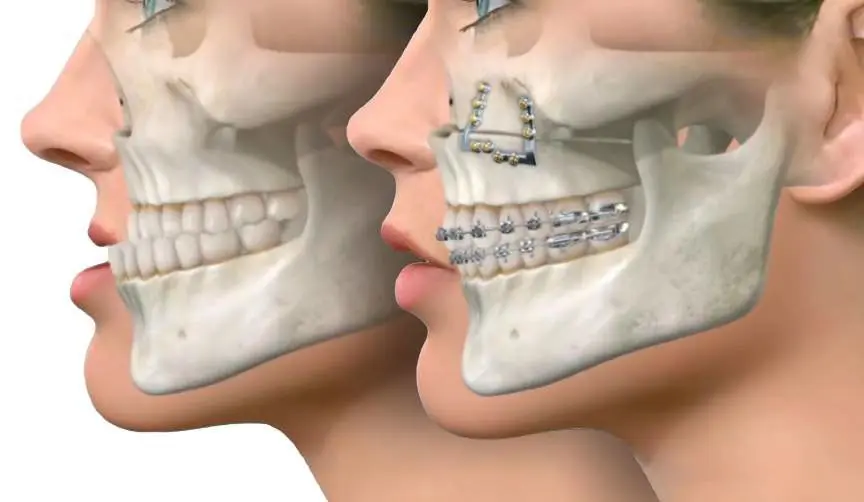
Common types of bite and jaw alignment problems include:
1. Overbite
An overbite occurs when the upper front teeth overlap the lower front teeth more than expected. Depending on its severity, it may affect tooth wear, the appearance of the smile and the way the teeth function.
2. Underbite
An underbite occurs when the lower front teeth sit in front of the upper front teeth. It may result from the position of the teeth, differences in jaw growth or a combination of factors.
3. Crossbite
A crossbite develops when some upper teeth sit inside the lower teeth instead of outside them. It may affect one or both sides of the mouth and can sometimes cause uneven tooth wear or a shift in the way the jaw closes.
4. Open Bite
An open bite occurs when the upper and lower front teeth do not touch when the back teeth are closed together. Depending on the cause, it may affect biting into food and certain speech functions.
5. Protruding Teeth
Protruding teeth extend farther forward than expected. The condition may be related to tooth position, jaw relationships or habits that affect dental development.
Understanding the type of bite problem is the first step towards identifying the right orthodontic treatment.
Can Braces Correct Jaw Alignment Problems?
Yes, braces can correct many bite problems, but they cannot correct every type of jaw misalignment on their own.
Traditional braces use brackets and wires to apply controlled forces that gradually move teeth into planned positions. By improving the relationship between the upper and lower teeth, braces can help correct several forms of malocclusion.
Braces may be recommended for:
- Crowded or crooked teeth
- Certain overbites and underbites caused mainly by tooth positioning
- Crossbites
- Open bites in selected cases
- Uneven spacing between teeth
- Bite problems that affect the way the teeth meet
In growing children and teenagers, orthodontic treatment may sometimes be combined with special appliances to help guide jaw development. In adults, braces can move teeth and improve the bite, but they cannot reliably change the position or size of fully developed jaws enough to correct every skeletal problem.
If the misalignment is severe and involves the underlying jaw bones, a combination of orthodontic treatment and corrective jaw surgery may be considered.
The appropriate treatment depends on a detailed clinical examination rather than the visible appearance of the teeth alone.
How Do Braces Help Improve Bite Alignment?
Braces are designed to move teeth gradually using controlled pressure. Your orthodontist adjusts the treatment plan throughout the process to help the teeth reach their intended positions.
Here is how braces can help improve bite alignment.
Correcting Tooth Position
Braces can reposition teeth that are tilted, crowded or rotated. This may help the upper and lower teeth fit together more appropriately.
Improving the Relationship Between Upper and Lower Teeth
When bite problems are mainly related to tooth positioning, braces and other orthodontic mechanics may help improve the way the teeth meet during biting and chewing.
Managing Selected Overbites and Underbites
Some overbites and underbites can be treated using braces, sometimes with elastics or other appliances. The treatment approach depends on whether the problem is primarily dental or skeletal.
Supporting Better Oral Hygiene
Crowded and overlapping teeth can be difficult to clean thoroughly. Correcting their positions may make brushing and flossing easier, helping patients maintain better oral hygiene.
It is important to remember that braces work differently for each patient. Treatment goals, expected changes and limitations should be discussed with an orthodontist before treatment begins.
Can Braces Correct Jaw Misalignment in Adults?
Yes, adults can benefit from orthodontic treatment even if their teeth and jaws have finished growing.
Braces can correct many dental alignment issues and improve the way the teeth meet. Adults with mild to moderate bite problems may be suitable for braces or clear aligners, depending on their individual diagnosis.
However, adult jaw misalignment caused by a significant skeletal discrepancy may require more than braces alone.
For example, if the lower jaw is substantially positioned forward or backward because of its underlying bone structure, moving the teeth may not fully correct the jaw relationship. In selected cases, an orthodontist may recommend coordinated treatment with an oral and maxillofacial surgeon.
Adults considering braces for jaw alignment in Pune should therefore undergo a comprehensive orthodontic assessment before choosing a treatment.
Braces vs Clear Aligners for Jaw Alignment Problems
Both braces and clear aligners are used to correct orthodontic problems, but their suitability depends on the complexity of the case.
| Feature | Traditional Braces | Clear Aligners |
| Design | Brackets and wires attached to teeth | Removable, transparent trays |
| Appearance | Metal or tooth-coloured options | Less noticeable during wear |
| Tooth movement | Suitable for a wide range of orthodontic cases | Suitable for selected mild to complex cases |
| Daily use | Remain attached throughout treatment | Must be worn as prescribed |
| Eating | Certain foods should be avoided | Removed while eating and drinking anything other than water |
| Maintenance | Requires careful cleaning around brackets | Requires cleaning of teeth and aligner trays |
Clear aligners may be suitable for some patients with bite alignment concerns, including selected overbites, underbites and crossbites. However, not every jaw problem can be corrected with aligners.
The choice between braces and aligners should be based on the diagnosis, treatment objectives, oral health and the patient’s ability to follow the prescribed treatment plan.
If you are exploring clear aligners or braces for jaw alignment problems in Pune, an orthodontist can help you understand which option is appropriate for your condition.
What Happens During an Orthodontic Consultation?
Before recommending braces or aligners, an orthodontist needs to understand the relationship between your teeth, jaws and facial structure.
At an orthodontic consultation, the assessment may include:
1. Dental examination: The orthodontist checks tooth alignment, crowding, spacing and the way your upper and lower teeth meet.
2. Bite assessment: The clinician evaluates whether the bite problem is mainly dental, skeletal or a combination of both.
3. Dental records and imaging: Photographs, dental impressions or digital scans, and X-rays may be recommended when clinically necessary.
4. Treatment planning: Based on the findings, the orthodontist explains suitable options, expected treatment duration, limitations and possible risks.
5. Follow-up planning: The treatment plan includes regular monitoring to assess tooth movement and make adjustments when needed.
A proper diagnosis helps patients understand whether braces alone may be sufficient or whether additional treatment should be considered.
When Is Jaw Surgery Needed Along With Braces?
Not all jaw alignment problems require surgery. However, some patients have a substantial difference in the position or size of their upper and lower jaws that cannot be corrected adequately by moving the teeth alone.
In such cases, corrective jaw surgery, also known as orthognathic surgery, may be recommended after careful evaluation.
Treatment may involve collaboration between an orthodontist and an oral and maxillofacial surgeon.
Depending on the case, braces may be used before surgery to position the teeth appropriately. Orthodontic treatment may continue after surgery to refine the bite.
Surgery is generally considered for selected patients with significant skeletal discrepancies that affect bite function or facial structure. The decision requires individual assessment, and surgery is not necessary for most routine orthodontic cases.
Why Consider an Orthodontic Consultation in Pune?
If you notice that your teeth do not meet properly, your lower jaw appears significantly forward or backward, or chewing feels uncomfortable, an orthodontic assessment can help identify the underlying cause.
At Signature Smiles Orthodontics, Pune, Dr. Aditi Kulkarni, orthodontist and aligner provider in Pune, can assess orthodontic concerns and discuss suitable options based on individual dental needs.
Patients searching for an orthodontist in Pune for jaw alignment problems, braces treatment in Pune for an overbite, or clear aligners for bite correction in Pune should look for a treatment plan that addresses both function and appearance.
An appropriate assessment can help determine whether conventional braces, clear aligners, growth-guidance appliances or a combined treatment approach may be suitable.
The aim of orthodontic treatment is to establish a healthier bite and improve tooth alignment while considering the patient’s individual needs and long-term oral health.
Frequently Asked Questions
1. Can braces fix a misaligned jaw without surgery?
Braces can correct many bite problems caused mainly by tooth positioning. However, significant skeletal jaw discrepancies may require corrective jaw surgery alongside orthodontic treatment. An examination is necessary to determine the appropriate approach.
2. Can braces correct an overbite?
Yes, many overbites can be improved with braces. Treatment may involve tooth movement, elastics or additional appliances. The approach depends on the severity and whether the overbite is caused by tooth position, jaw structure or both.
3. Can clear aligners fix jaw alignment problems?
Clear aligners can correct selected bite problems, but their suitability depends on the complexity of the case. Significant skeletal discrepancies generally cannot be corrected with aligners alone.
4. Is it too late to get braces for jaw alignment as an adult?
No. Adults can receive orthodontic treatment at different ages if their teeth and gums are healthy enough for treatment. However, adult skeletal jaw discrepancies may require a combined orthodontic and surgical approach.
5. How long does braces treatment take for jaw alignment?
Treatment duration varies according to the type and severity of the bite problem, the treatment method and the patient’s response. Many comprehensive orthodontic treatments take around 18–24 months, although some cases take less or more time. Your orthodontist can provide an individual estimate after assessment.
6. Which orthodontist should I consult for jaw alignment treatment in Pune?
Look for a qualified orthodontist who can evaluate your bite, assess the underlying cause and explain the available treatment options. Dr. Aditi Kulkarni at Signature Smiles Orthodontics in Pune offers orthodontic and aligner-related consultations.
Conclusion
Braces can improve many jaw alignment problems by repositioning teeth and helping the upper and lower teeth meet more appropriately. However, the right treatment depends on whether the problem is caused by tooth position, jaw development or a combination of both.
While braces or clear aligners may be sufficient for selected cases, severe skeletal discrepancies may require a combined approach involving orthodontics and corrective jaw surgery.
If you are looking for braces for jaw alignment problems in Pune or want to understand whether clear aligners are suitable for your bite, consider an orthodontic consultation with Dr. Aditi Kulkarni at Signature Smiles Orthodontics.
Address: Shop No. 1, Ekta Apartments, Law College Road, Near Nal Stop, Erandawane, Pune – 411004
Call Now: +91 88883 34511
Get Direction
Disclaimer: This AI-generated content has been reviewed and edited by an orthodontist for accuracy and educational purposes. It is not a substitute for professional dental advice or treatment.