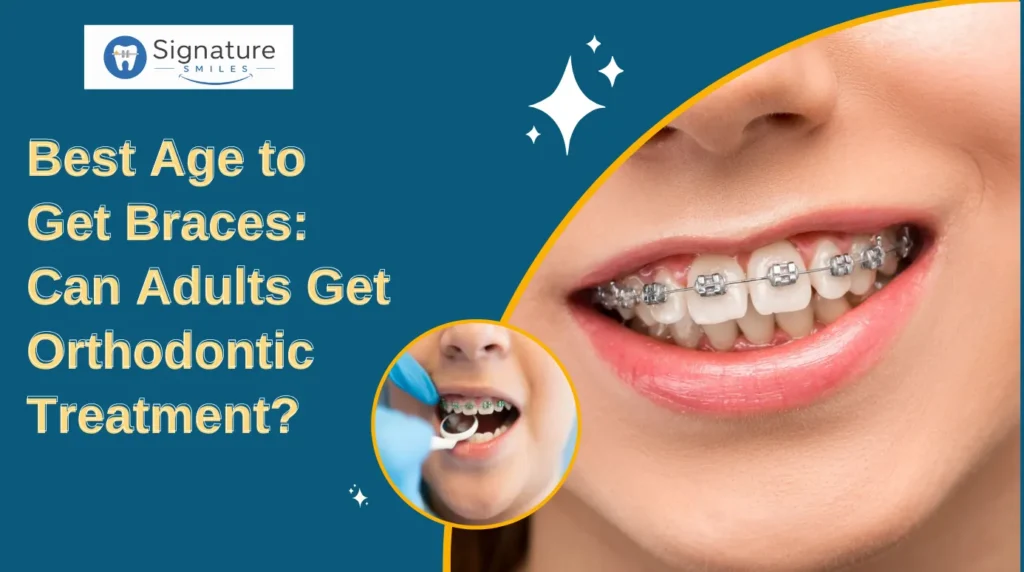

A straight, healthy smile is not limited to childhood or teenage years. If you have crooked teeth, dental crowding, gaps, an overbite, underbite, or other bite-related concerns, orthodontic treatment can often be considered at almost any age.
Many parents wonder, “What is the best age to get braces?” At the same time, adults frequently ask, “Am I too old for braces?” The answer to both questions depends on the individual’s dental development, oral health, bite, jaw relationship, and treatment goals—not simply their age.
According to the American Association of Orthodontists (AAO), age alone is rarely a deciding factor, and adults can benefit from orthodontic treatment too.
At Signature Smiles Orthodontic, Dr. Aditi Kulkarni, a top orthodontist and aligners specialist in Pune, provides personalized orthodontic treatment plans designed around each patient’s dental needs, lifestyle, and smile goals.
What Is the Best Age to Get Braces?
There is no single age that is ideal for everyone. However, orthodontic evaluation during childhood can help identify developing dental and jaw problems at the right time.
The AAO recommends that children have their first orthodontic evaluation by around age 7. This does not mean that every 7-year-old needs braces. Rather, an early assessment allows an orthodontist to monitor tooth eruption, jaw growth, crowding, crossbite, and other developing concerns.
For many children and teenagers, active orthodontic treatment begins later, often when most permanent teeth have erupted. The exact timing varies according to dental development and the specific orthodontic problem.
General Age Guide for Orthodontic Treatment
| Age | What Usually Happens |
| Around 7 years | Orthodontic evaluation can identify developing problems |
| 8–11 years | Some children may benefit from early/interceptive treatment |
| 11–14 years | A common period for comprehensive braces treatment |
| 15–17 years | Braces can still effectively correct many alignment and bite problems |
| 18+ years | Adults can undergo braces or clear aligner treatment |
| 30s, 40s, 50s+ | Orthodontic treatment may still be possible after evaluating oral health |
The important point is that the best age for braces is the age at which treatment is appropriate for your particular dental condition.
Can Adults Get Braces?
Yes. Adults can get braces and other orthodontic treatments.
Being an adult does not automatically make you unsuitable for orthodontic treatment. Teeth can be moved at different stages of life when appropriate orthodontic forces are applied and the teeth, gums, and supporting bone are healthy.
The AAO notes that orthodontic treatment can be successful for adults as well as younger patients. Adult treatment may sometimes take longer because adult bone is more mature and because adults may have additional dental considerations such as fillings, missing teeth, worn teeth, or previous dental problems.
This means that if you are wondering:
“Can I get braces at 25?”
“Can I get braces at 30?”
“Can I get braces at 40?”
“Is it too late to straighten my teeth?”
—in many cases, the answer is no, it is not too late.
A detailed orthodontic examination is necessary to determine whether braces, clear aligners, or another treatment approach is appropriate.
Why Are More Adults Choosing Orthodontic Treatment?
Adults choose orthodontic treatment for both cosmetic and functional reasons.
Some common reasons include:
- Crooked or rotated teeth
- Crowded teeth
- Gaps between teeth
- Protruding teeth
- Overbite
- Underbite
- Crossbite
- Open bite
- Difficulty cleaning between crowded teeth
- Changes in tooth position over time
- Desire for a more confident smile
- Improving the way the upper and lower teeth meet
Orthodontic treatment isn’t only about appearance. Correcting tooth alignment and bite can also make teeth easier to clean and may help improve oral function.
Braces for Adults vs. Braces for Teenagers
The basic principles of orthodontic tooth movement remain similar, but adult orthodontic treatment can involve additional considerations.
1. Bone and jaw development
Teenagers are still undergoing facial and jaw development, while adults have completed most of their growth.
This can influence the type and timing of treatment.
2. Existing dental work
Adults may already have:
- Dental fillings
- Crowns
- Missing teeth
- Dental implants
- Worn teeth
- Previous orthodontic treatment
Your orthodontist needs to consider these factors before creating a treatment plan.
3. Gum health
Healthy gums are particularly important before and during orthodontic treatment. Braces can make cleaning around the teeth more challenging, so maintaining good oral hygiene is essential.
4. Treatment duration
Adult orthodontic treatment may sometimes take longer than comparable treatment in younger patients, depending on the complexity of the case and individual biology.
What Is the Best Age for Braces for Children?
For many children, comprehensive orthodontic treatment is considered when most permanent teeth have erupted.
This is commonly around the early teenage years, but there is no fixed age that applies to every child. The NHS notes that orthodontic treatment is often started around age 12, depending on permanent tooth eruption and facial and jaw development.
Some children may require treatment earlier.
For example, an orthodontist may recommend early intervention for certain developing problems such as:
- Severe dental crowding
- Crossbite
- Significant jaw discrepancies
- Impacted teeth
- Problems with tooth eruption
- Certain harmful oral habits
Early orthodontic assessment can therefore be valuable even when immediate braces are not necessary.
Is 7 Too Young for Braces?
Not necessarily—but an orthodontic check-up at age 7 does not mean braces are required at age 7.
At this stage, children typically have a combination of primary and permanent teeth. An orthodontist can monitor tooth eruption and jaw development and determine whether treatment should begin immediately, later, or not at all.
In many cases, the orthodontist may simply recommend periodic monitoring until the child reaches the appropriate stage of dental development.
What Types of Orthodontic Treatment Are Available for Adults?
Adults today have several orthodontic treatment options.
1. Traditional Metal Braces
Metal braces are a well-established orthodontic treatment option. They use brackets and wires to gradually move teeth into planned positions.
They can be suitable for a wide range of alignment and bite problems.
2. Ceramic Braces
Ceramic braces use tooth-coloured or relatively discreet brackets, making them less noticeable than traditional metal braces.
They may be an option for adults who prefer a more aesthetic fixed appliance.
3. Clear Aligners
Clear aligners are removable, transparent orthodontic appliances designed to gradually move teeth.
They are particularly popular among adults who want a more discreet orthodontic treatment option.
As an aligners specialist in Pune, Dr. Aditi Kulkarni can assess whether clear aligners are appropriate for your particular alignment and bite concerns.
4. Other Orthodontic Appliances
Depending on the problem, an orthodontist may recommend additional appliances or a combination of treatment approaches.
The right option should be selected after a detailed clinical evaluation rather than simply choosing the most popular treatment.
How Long Do Braces Take for Adults?
There is no universal treatment duration.
The time required depends on factors such as:
- Severity of crowding
- Type of bite problem
- Tooth movement required
- Jaw relationship
- Age and individual biology
- Gum and bone health
- Patient cooperation
- Type of orthodontic appliance
- Regularity of orthodontic appointments
Orthodontic treatment can commonly take several months to a few years depending on the complexity of the case. The NHS states that orthodontic treatment may range from approximately 6 to 30 months depending on the problem.
Your orthodontist can provide a more meaningful estimate after examining your teeth and developing a treatment plan.
Are Braces Painful for Adults?
Braces generally do not cause continuous severe pain.
You may experience temporary:
- Pressure
- Tightness
- Tooth sensitivity
- Mild soreness after adjustments
These sensations generally settle as you adapt to the appliance.
Your orthodontist will guide you about managing any discomfort during treatment.
Do Adults Need Healthy Teeth and Gums Before Braces?
Yes.
Good oral health is an important part of orthodontic treatment.
Before starting braces or aligners, your orthodontist may evaluate:
- Tooth decay
- Gum health
- Existing dental restorations
- Missing teeth
- Tooth wear
- Oral hygiene
- Jaw and bite relationships
Orthodontic appliances can make cleaning more difficult, which is why maintaining excellent oral hygiene throughout treatment is important.
If you have active tooth decay or gum disease, these problems may need to be addressed before orthodontic treatment begins.
What Happens During an Orthodontic Consultation?
At Signature Smiles Orthodontic, an orthodontic consultation typically begins with understanding your concerns and assessing your teeth and bite.
Depending on your individual case, the orthodontic assessment may involve:
- Discussion of your smile and bite concerns
- Examination of your teeth and gums
- Evaluation of your bite
- Assessment of tooth alignment and spacing
- Evaluation of jaw relationships
- Dental photographs and diagnostic records when required
- Discussion of suitable treatment options
- Estimated treatment duration
- Retention and post-treatment care planning
Dr. Aditi Kulkarni can then recommend whether braces, clear aligners, or another orthodontic approach is appropriate for your needs.
Braces or Clear Aligners: Which Is Better for Adults?
There is no single treatment that is best for every adult.
The choice depends on:
- Your orthodontic problem
- Complexity of tooth movement
- Bite correction required
- Lifestyle
- Aesthetic preferences
- Ability to follow aligner-wearing instructions
- Overall oral health
For some adults, braces may provide an excellent solution. For others, clear aligners may offer a convenient and discreet alternative.
A qualified orthodontist should determine the appropriate treatment after a comprehensive examination.
What Are the Benefits of Adult Orthodontic Treatment?
Adult orthodontic treatment can offer several potential benefits, including:
Improved tooth alignment
Crowded, rotated, or crooked teeth can be repositioned.
Better bite relationship
Orthodontic treatment can address certain overbite, underbite, crossbite, and open-bite problems.
Easier oral hygiene
Straighter teeth may be easier to brush and floss effectively.
Improved smile aesthetics
Better alignment can enhance the appearance of your smile.
Increased confidence
Many adults feel more comfortable smiling and interacting socially after orthodontic treatment.
It’s important to remember that treatment goals are individualized and depend on your specific dental condition.
Why Choose an Orthodontist for Braces in Pune?
Orthodontic treatment involves much more than simply placing braces on teeth. Diagnosis, treatment planning, controlled tooth movement, bite correction, monitoring, and retention all influence the final result.
Choosing an orthodontist can help ensure that your treatment plan is developed specifically around your orthodontic needs.
At Signature Smiles Orthodontic, Dr. Aditi Kulkarni focuses on orthodontic care and clear aligner treatment in Pune, helping children, teenagers, and adults work toward healthier and more confident smiles.
Frequently Asked Questions About the Best Age for Braces
1. What is the best age to get braces?
There is no universal best age. Many children begin comprehensive orthodontic treatment during the early teenage years, but the ideal timing depends on tooth eruption, jaw development, and the specific orthodontic problem.
2. Can adults get braces?
Yes. Adults can undergo orthodontic treatment when their teeth, gums, and supporting structures are suitable for treatment. Age alone does not automatically prevent orthodontic treatment.
3. Can I get braces at 30?
Yes, many people can receive orthodontic treatment at 30. Your orthodontist will first evaluate your teeth, gums, bone support, bite, and overall oral health.
4. Can I get braces after 40?
In many cases, yes. Adults over 40 may still be candidates for braces or clear aligners. A detailed orthodontic evaluation is important because adults may have additional dental conditions that need consideration.
5. Is 25 too old for braces?
No. Being 25 does not automatically make you too old for braces. The suitability of treatment depends more on your dental and orthodontic condition than your age.
6. Is 7 the right age to start braces?
Not necessarily. Around age 7 is generally recommended as an age for an orthodontic evaluation, not necessarily for starting braces. Only some children require treatment at that age.
7. Are braces better than aligners for adults?
Neither is universally better. Braces and clear aligners have different advantages and may be appropriate for different cases. Your orthodontist can recommend the option that best suits your dental condition and treatment goals.
8. How long do adults need to wear braces?
Treatment duration varies considerably. Depending on the complexity of the case, orthodontic treatment may take several months to a couple of years or longer. Your individual treatment plan will provide a more accurate estimate.
9. Can braces fix crowded teeth in adults?
Braces can correct many types of adult dental crowding. However, the treatment approach depends on the amount and cause of crowding, available space, bite, and overall dental health.
10. Do adults need a special type of braces?
Not necessarily. Adults may be treated with traditional metal braces, ceramic braces, or clear aligners depending on their individual needs.
11. Can clear aligners be used instead of braces?
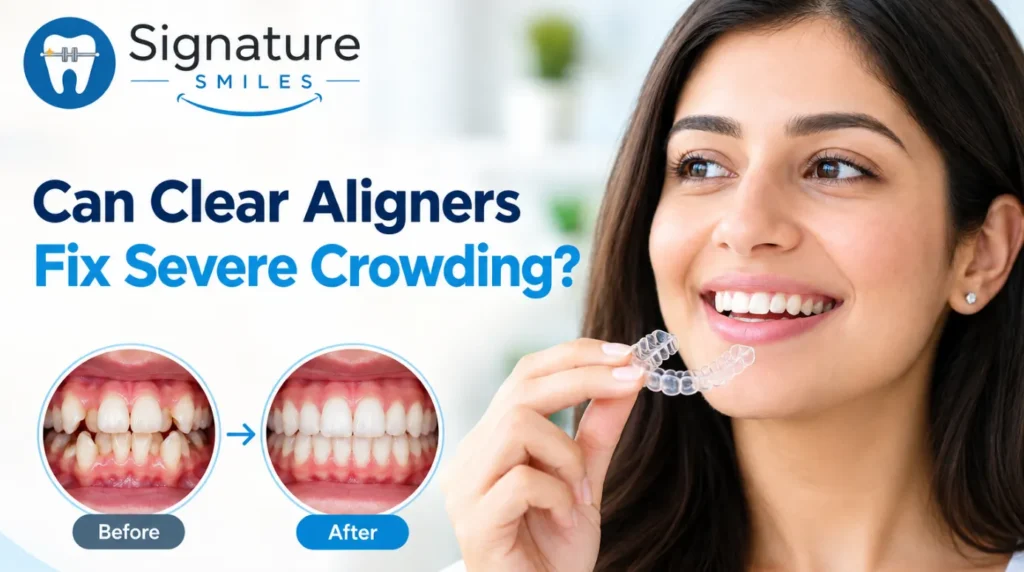
Clear aligners can be an effective option for many orthodontic cases, but they are not suitable for every patient or every type of tooth movement. An orthodontic assessment is required to determine suitability.
12. Should I wait if my teeth are getting crooked?
It is better to have the problem assessed rather than assuming it will correct itself. Tooth movement can occur over time, and an orthodontic consultation can identify the cause and available treatment options.
Takeaway: It Is Not Too Late to Improve Your Smile
The best age to get braces isn’t simply a number. For children, early orthodontic evaluation can identify developing problems and help determine the right treatment timing. For teenagers, the eruption of permanent teeth and jaw development often influence when comprehensive treatment begins.
For adults, orthodontic treatment remains a viable option in many cases. Whether you are 20, 30, 40, 50, or older, the first step is a professional orthodontic assessment.
If you are looking for braces for adults in Pune, orthodontic treatment for teenagers, or a clear aligners specialist in Pune, consult Dr. Aditi Kulkarni at Signature Smiles Orthodontic to understand which treatment option may be appropriate for your smile.
Don’t let age stop you from exploring orthodontic treatment. Your ideal time to start may be now.
Address: Shop no. 1, Ekta Apartments, Law College Rd, near NAL Stop, Pune, Maharashtra 411038
Call Now: 88883 34511
Get Direction